
LOCKS & LATCHES / DUNWOODY
It used to turn easily.
A familiar door should not need a new trick every morning. Describe the change in the key, handle or latch before deciding what needs replacing.
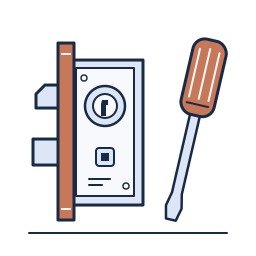
Follow the symptom.
Does the key resist going in, stop while turning or turn without the result you expect? Does the latch catch only after you pull hard on the door? Those are different observations. Explain what happens during ordinary use, whether it affects every available key and how recently it began.
Avoid forcing a key or testing the mechanism repeatedly once it feels wrong. You can discuss a home lock or a business premises lock without diagnosing the internal fault yourself. Say if the door currently cannot be secured or if you are already unable to enter.
The door matters too.
A lock and the door around it work together. Mention visible rubbing, a door that does not sit as it used to, a loose handle or a latch that misses its opening. If you have already noticed different behavior with the door open and closed, report that; you do not need to recreate a fault that risks leaving you locked out.
For a shared building door, involve the responsible manager. For your own private entrance, identify the affected door and who can authorize work. Dunwoody’s houses, apartment communities and Village businesses are different settings; the neighborhood name alone cannot identify the hardware or who controls it.
Repair or a new key arrangement?
An unreturned spare is a question about keyholders. A handle that no longer works normally is a question about the hardware. Both can matter on the same door, but they should be described separately so the proposed work addresses each intended result.
See rekeying locks when the goal is to change which keys operate compatible hardware. If repair or replacement is proposed for a fault, ask what was found, what the work includes and how the final operation will be checked.
Before arranging the visit.
Have the full address, the affected private door and any working key available for the conversation. Mention visible damage and any approval needed from an owner or landlord. Ask how to describe or share the visible hardware if more detail is needed; do not dismantle it for the call.
Use 404-882-2278 to confirm availability and the next assessment step. The estimate page explains how to separate an initial description from the work you ultimately approve.
GOOD QUESTIONS
A little more detail.
Should I keep using a key that needs force?
Avoid forcing it or repeatedly testing a reluctant mechanism. Describe what you have observed and whether the door can currently be opened and secured.
Does an unreliable latch mean the key needs changing?
Not necessarily. Describe the latch and door behavior as a repair issue. A separate wish to change who holds working keys belongs in the same conversation but is a different intended result.